🇺🇲
What I’ve Learned About China (So Far!)
I recently noticed that I’ve had over 500 visitors from China on my website! I’m not sure if that’s because I put up some QR codes for my blog around Lisse during the Keukenhof season, buuut I think it’s so cool to see that people from China keep coming back to read my blog 🥰
So I thought to myself: what do I actually know about China?
Answer: pretty much nothing.
That’s why I thought it would be amazing to have a kind of pen pal in China — someone I could exchange letters or messages with! If that sounds fun to you, let me know!
Anyway, time to learn a few basics about China. Apparently, the official name is The People’s Republic of China — already learned something new! (Assuming my source is right 😅). The capital is Beijing (Peking) — that one I did remember from school.
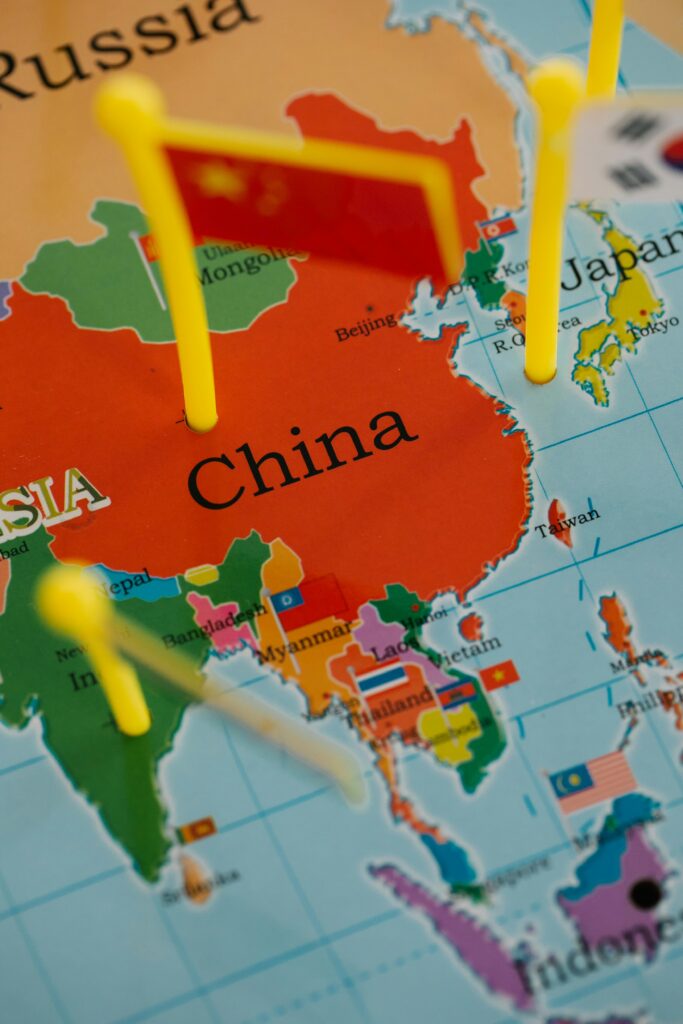
After Russia and Canada, China is the third largest country in the world, covering about 9.6 million square kilometers, and with a population of around 1.4 billion people, it’s also the most populated country on Earth.
The official language is Standard Mandarin, which is based on the Beijing dialect — though of course there are many other dialects. I did remember that Chinese uses characters instead of an alphabet, but I had no idea there were so many different religions practiced in China! Some I’d honestly never even heard of 😅 — like Confucianism. There’s also Taoism, Buddhism, Christianity, and Islam, and apparently many Chinese people combine elements of different traditions.
Moving on — I wasn’t too surprised to learn that electronics is one of the country’s main industries. The currency is the Renminbi, which literally means “the people’s currency,” and its unit is the yuan.
China’s political system is a socialist one-party state, led by the Communist Party of China — that’s quite interesting! The country is divided into 23 provinces, 5 autonomous regions (like Tibet), 4 municipalities, and 2 special administrative regions. I’ll admit, I don’t fully understand how that all works yet, but I find it genuinely fascinating.
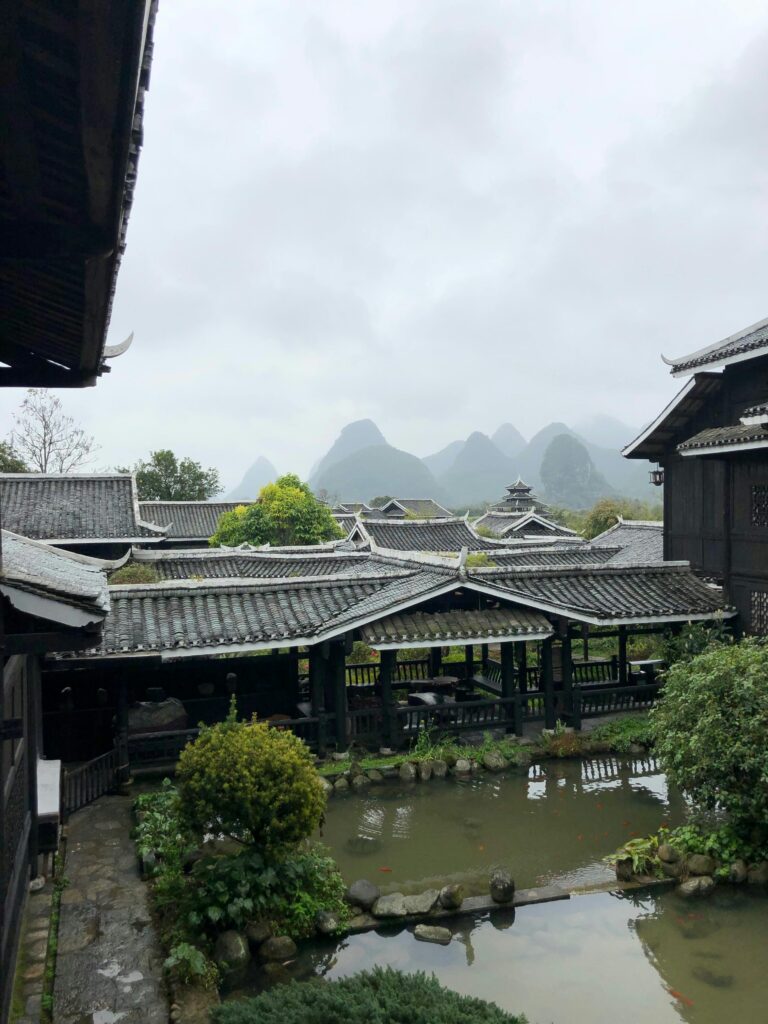
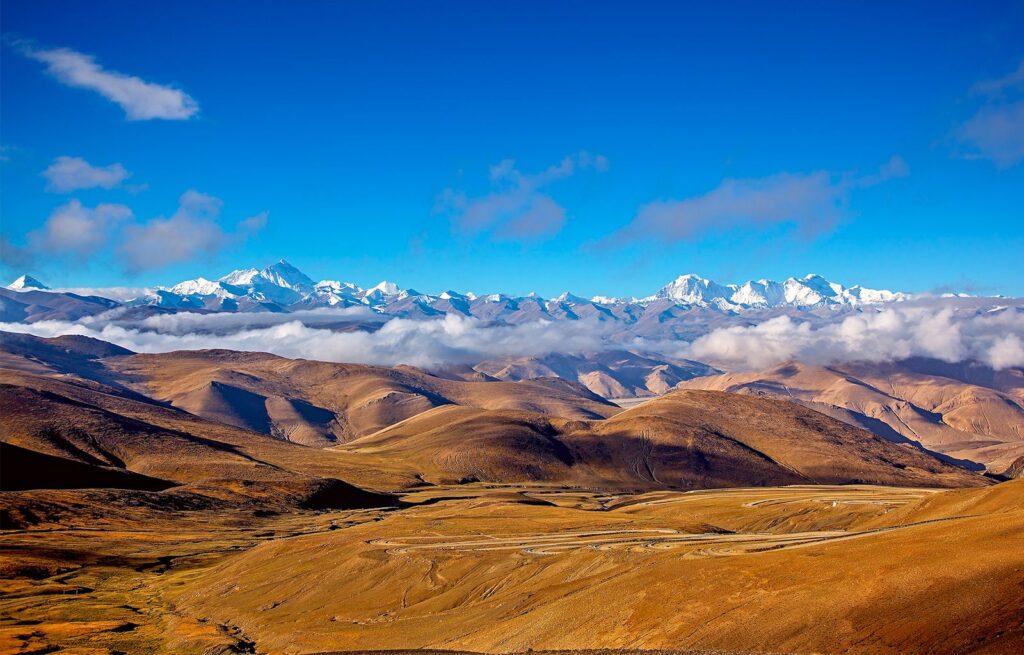
From school I also remembered that China has an incredibly diverse landscape — from mountains and deserts to vast plains and major rivers. The climate is just as diverse: subarctic in the north and tropical in the south. (And then we complain about the weather here in the Netherlands…)
Famous landmarks include:
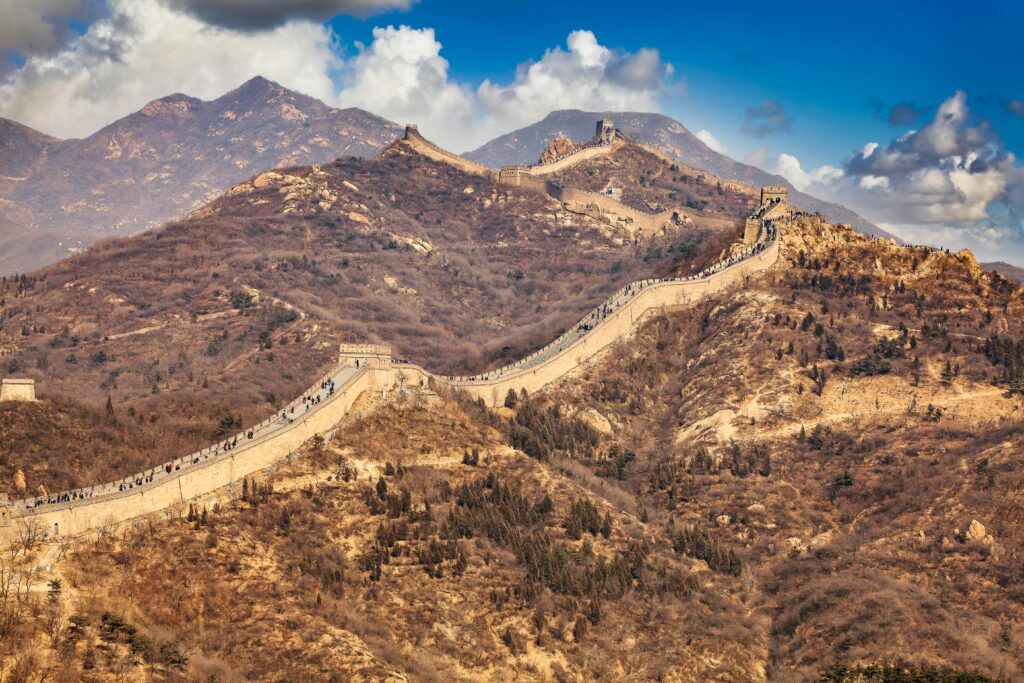
▪️ The Great Wall of China
▪️ The Forbidden City (Beijing)
▪️ The Terracotta Army (Xi’an)
▪️ Guilin (karst landscape)
▪️ The Tibetan Plateau
And speaking of the Great Wall, that’s probably the part that fascinates me most — not just because my own grandmother actually walked there once, but also because I’ve heard several different theories about it… 🧐
The traditional theory says that the Wall was built as a defense line against northern nomadic tribes. That’s the official and classic explanation found in Chinese history books for centuries.
Then there’s the multi-purpose theory, which says the Wall wasn’t only military — it also had economic, political, and symbolic functions. According to this theory, the Wall served as a form of border control — regulating taxes, trade, and migration. The watchtowers and fortresses were used for communication (through smoke signals!), and the Wall symbolized the emperor’s power and the unity of China after centuries of warfare. This interpretation is widely supported by modern historians.
Next up is the mythical and symbolic theory, which suggests the Wall is partly a cultural symbol, not always a physical structure as we imagine it today. The term “Long Wall” (长城 – Changcheng) appeared in different contexts — sometimes referring to a series of fortifications, not a single continuous wall. Many sections were actually made of earth, rivers, or natural barriers, later seen as part of “the Wall.” The idea of one Great Wall made of stone didn’t emerge until the Ming dynasty (14th–17th century), when the most visible parts were built.
And finally, there’s the alternative theory, which I came across once and found really interesting. Some historians suggest the Wall wasn’t just meant to keep enemies out, but also to keep people in. During times of political unrest, it served as a border of the empire, helping enforce taxes and military service. The guards along the Wall prevented farmers and soldiers from escaping north. This view portrays the Wall more as a tool of internal control than pure defense.
So… it kind of feels like I just prepared a school presentation about China, haha — but honestly, I found it all super interesting, and I hope you did too 😊
And if I got anything wrong, please let me know!
Thanks so much for reading 🩷
🇳🇱
Het is mij opgevallen dat is meer dan 500 bezoekers heb van mijn website uit China. En ik weet niet of het te maken heeft met dat ik QR codes van mijn blog heb opgehangen in Lisse tijdens de keukenhof maaarrrr ik vind het wel onwijs leuk om te zien dat er dus ook mensen steeds weer terug gaan naar mijn blog 🥰
Dus ik dacht, wat weet ik eigenlijk van China?
Antwoord : zo goed als niets.
Het lijkt me dan ook onwijs leuk om een soort penvriend te hebben in China, waarmee ik over en weer kan schrijven! Als jou dit ook leuk lijkt, let me know!
En dan ga ik nu even wat basis informatie opdoen over China.
Blijkbaar is de officiële naam Volksrepubliek China, nu al wat geleerd! Als mijn bron klopt natuurlijk.
De hoofdstad is Beijing (Pekin), dit heb ik wel ooit geleerd op school.
Na Rusland en Canada is dit het grootste land met 9.6 miljoen vierkante kilometer en er leven zo’n 1.4 miljard mensen wat dit land ook het land maakt met de grootste bevolking ter wereld.
De officiële taal is standaard mandarijn, gebasseerd op het dialect van Beijing. Maar er zijn natuurlijk meerdere dialecten.
Dat het Chinese alfabet bestaat uit tekens wist ik ook nog wel.
Maar dat er zoveel verschillende religies binnen dit land waren wist ik niet! En sommige heb ik ook Überhaupt nog nooit van gehoord 😅 zoals Confucianisme… dan heb je ook nog taoïsme, boeddhisme, christendom en de islam en blijkbaar zijn er veel Chinezen die elementen combineren van verschillende tradities.
Eens even verder kijken, dat de belangrijkste industrie elektronica is, zag ik wel aankomen.
De valuta is Renminbi wat staat voor ‘munt van het volk’ in de eenheid ‘yuan’.
De staatsvorm is een Socialistische eenpartijstaat en de regeringspartij is een Communistische Partij van China… dat is interessant.
De bestuurlijke indeling zijn 23 provincies, 5 autonome regio’s (zoals Tibet), 4 stadsprovincies en 2 administratieve regio’s.
Ik moet toegeven dat ik er nog niet veel van snap maar ik vind het wel oprecht interessant!
Dat ze een zeer divers landschap hebben wist ik ook nog wel van school, van bergen tot woestijnen, vlaktes en rivieren. En het klimaat is ook zeer divers met subarctisch in het noorden en tropisch in het zuiden. (En dan klagen we hier in Nederland…)
Beroemde plekken zijn :
▪️De Chinese muur
▪️Verboden Stad (Beijing)
▪️Terracottaleger (XI’an)
▪️Guilin (karstlandschap)
▪️Tibetaanse hoogvlakte
En dan heeft de Chinese muur misschien (nog) wel mijn meeste aandacht, niet alleen omdat mijn eigen oma hier gelopen heeft maar omdat ik ook verschillende theorieën heb gehoord over deze muur… 🧐
De traditionele theorie is dat De Muur werd gebouwd als verdediginglinie tegen noordlijke nomadische volkeren. Dit is ook de officiële en klassieke uitleg die lang in Chinese geschiedenisboeken stond.
Maar dan is er ook de multipurpose-theorie.
De Muur had niet alleen een militaire functie maar ook economische, politieke en symbolische functies. Zo beweert deze theorie dat De Muur diende als grenscontrole; tolheffing, handel en migratie werden hiermee gereguleerd.
De wachttorens en forten fungeerden als communicatielijn met rooksignalen. en De Muur symboliseerde de macht van de keizer en de eenheid van China na eeuwen van oorlog tussen staten.
Deze visie wordt tegenwoordig breed gesteund door moderne historici.
Dan is er nog de mythische en symbolische theorie.
Deze zegt dat De Muur deels een cultureel symbool is en niet altijd een fysieke constructie in de vorm zoals we die nu zien.
De term “Lange Muur” (长城 – Changcheng) komt in verschillende contexten voor — soms betekent het een reeks versterkingen, niet letterlijk één muur.
Veel delen waren aarden wallen, rivieren, of natuurlijke barrières die later werden gezien als onderdeel van “de Muur”.
Het idee van “de Grote Muur” als één lange stenen muur ontstond pas in de Ming-dynastie (14e–17e eeuw), toen de huidige zichtbare delen werden gebouwd.
En dan hebben we de theorie die ik ooit voorbij heb zien komen en dat is de alternatieve theorie.
Sommige historici stellen dat de Muur niet alleen bedoeld was om vijanden buiten te houden, maar ook om onderdanen binnen te houden.
In tijden van politieke onrust diende de Muur als grens van het rijk, om belastinginning en militaire dienst te handhaven.
De bewaking langs de Muur voorkwam dat boeren en soldaten naar het noorden vluchtten.
Deze theorie benadrukt de Muur als instrument van interne controle in plaats van puur verdediging.
Het voelt een beetje alsof ik mij heb voorbereid voor een spreekbeur over China haha maar ik vond het onwijs interessant en jij als lezer hopelijk ook 😊
En als ik het ergens fout heb, let me know!
Bedankt voor het lezen 🩷