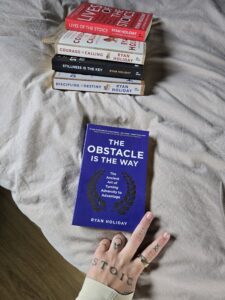
Trauma initially interested me only because I myself had traumas that I could not cope with. And I started reading books about that like The Body Keeps The Score and Little Traumas. Very interesting!
I understood myself a little better, learned to process even better and I gained more understanding for other people ❤️
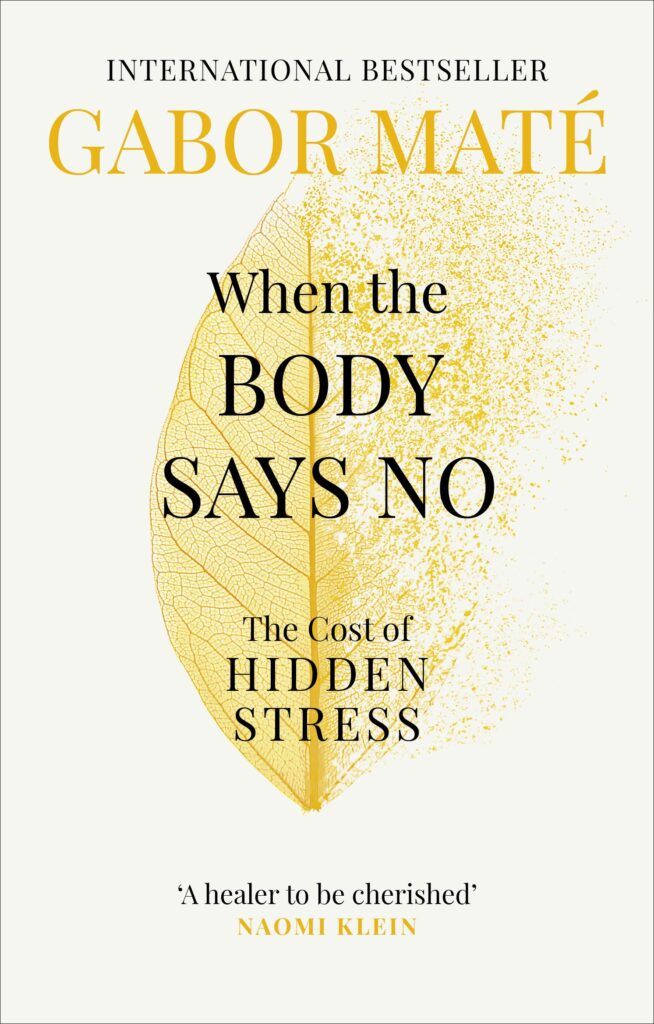
This book by Gabor Maté is indirectly about trauma. Or let me put it this way, I didn’t know the book was going to be about trauma.
On the back are the questions: can someone literally die from loneliness? Is there a connection between Alzheimer’s disease and the extent to which someone can express themselves emotionally? And, can childhood experiences affect our health once we reach adulthood? 🧐
These questions already had my attention.
There is someone in my immediate surroundings who was suffering from her body, and that actually caused me to read this book, to see if it was something for her. And even though it isn’t, I’m glad I read it!
This book contains quite a few technical terms, among other things, the functioning of our body, and I sometimes just had to read ‘over’ without understanding it, because it later fell into place. And I don’t think you have to understand everything perfectly to see the big picture.
I don’t think this is a good book for beginners or for people who aren’t familiar with biology at all, but I definitely recommend it!
There are many recognizable stories in it and I guarantee that it contains a story that you either recognize in yourself or in someone around you. I would prefer to call those people right away to tell them to read this book, but I have learned that some people are very comfortable in their victim role and do not want to be helped. So I stopped doing that… 😅
I read this book in my own language (Dutch) because I already had a suspicion that there would be many technical terms in it. And in the Dutch version there are a few spelling mistakes or words that are missing. (I always find it crazy.) But again; definitely recommended, when the subjects of childhood experiences that affect your adult life interest you. It’s really very instructive!
The key message ☝🏼
The book shows that our bodies respond to unconscious stress and unprocessed emotions, especially when we have trouble setting boundaries or are always ready for others. Gabor argues that many chronic conditions do not arise by chance, but arise from prolonged hidden stress and emotional suppression.
What you can learn 🤓
– Body and mind are one-way stress, and emotions directly affect physical health.
– Chronic stress weakens the immune system and can lead to diseases such as autoimmune problems, cardiovascular disease and more.
– Emotional honesty and self-care are important keys: learning to set boundaries, acknowledge your feelings, and take better care of yourself can improve your health.
Gabor uses recognizable practical examples to show how life history, coping patterns and stress are associated with illness.
In any case, the book invited me to become aware of my own stress patterns, treat myself with compassion, and lead a healthier, more balanced life. It gave me insight into the inner signals of a body and courage to listen to them.
Things I’ve underlined ❗️
– People burdened with extreme stress, such as serious relationship problems or financial uncertainty, were found to be nearly four times more likely to have their symptoms worsened.-
– A few decades ago, British breast surgeon David Kissen reported that patients with lung cancer were often characterized by a tendency to “catch up” emotions.
– We cannot assume that as we age, we automatically become emotionally independent.
There are also so many studies that go back to the late 70s, 80s and 90s that I am amazed at how little this is taught to people. And I don’t think our current doctors know all this either, a shame.
Thanks for reading 🩷
Let me know in the comments if you have read it and what you think!
If you live in The Netherlands;
🇳🇱 Bestel hier de Nederlandse editie! 🇳🇱
🇺🇲 Buy the English edition here! 🇺🇲