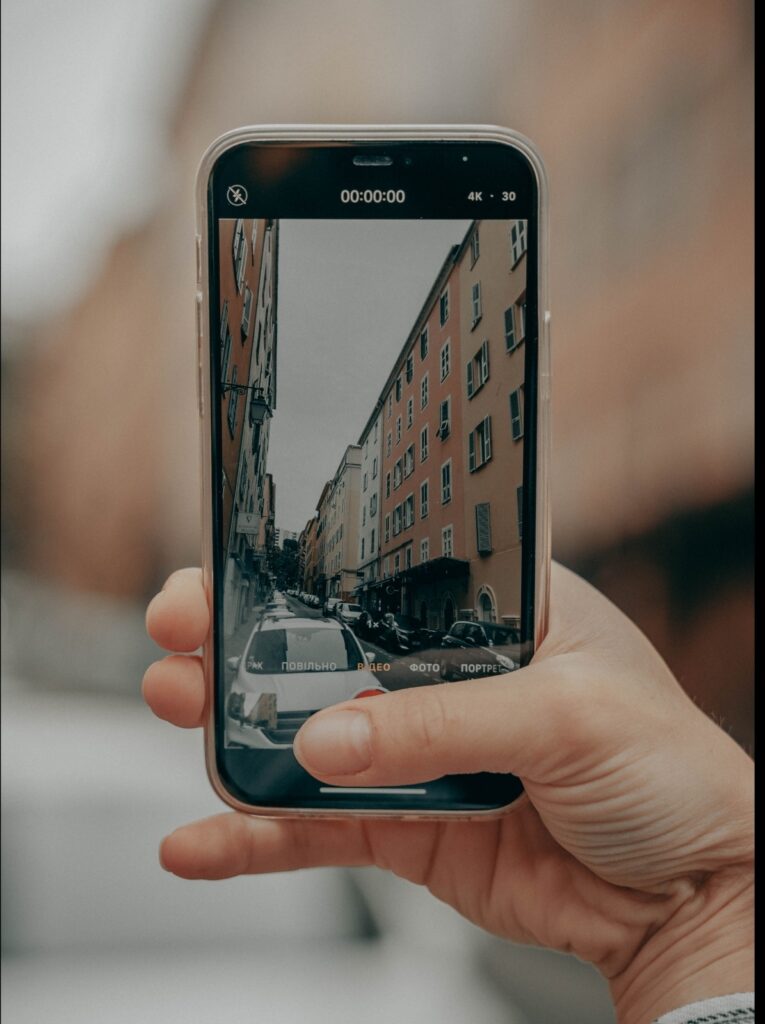
Your Camera Got the Shot. But Did Your Brain? 🧠
You know that tiny ritual: see something beautiful, grab your phone, take one or a few nearly identical photos, and walk away feeling certain the moment has been safely stored. The camera roll is full. Your brain, however, may have quietly clocked out.
Imagine visiting an art museum 🏛️ You stop in front of an ancient sculpture, admire it for three seconds, then begin the sacred modern ceremony: unlock phone, open camera, straighten frame, remove thumb from lens, take photo, inspect photo, retake photo. Later, someone asks what the sculpture looked like.You remember that the picture was excellent. ✨ The sculpture? Hmm. 🤔
This curious gap has a name: the photo-taking-impairment effect. 📸➡️🧠 It was demonstrated in research by Fairfield University psychologist Linda Henkel, who took undergraduate participants on guided tours of the university’s Bellarmine Museum of Art.
During the first experiment, participants encountered 30 works of art—paintings, sculptures, pottery, jewelry, mosaics, and more. They photographed half and simply observed the other half. The next day, their memories were tested.
The result was not exactly a five-star review for point-and-shoot tourism…
Participants were less accurate at recognizing the objects they had photographed than those they had only observed. They also remembered fewer visual details about the photographed works. In other words, pressing the shutter button did not strengthen the memory; in several measures, it weakened it. 📉
💾 Your brain has outsourced the job
Why might this happen? One possibility is that taking a photo tells the brain, “Relax, we have a backup.” Once the camera has captured the object, the mind may spend less effort encoding it. Another possibility is simple distraction: instead of studying the artwork, we start studying the screen, the angle, the lighting, and whether our composition looks effortlessly spontaneous.
Henkel’s second experiment, however, produced a plot twist! 🔄 Participants again toured the museum, but this time they either observed an object, photographed the whole object, or zoomed in on one specific feature—such as a statue’s hands.
Photographing the entire object again impaired memory for its visual details. But zooming in did not. 🔍 When participants deliberately focused on one feature, their detail memory was about as good as when they had simply observed the artwork. Even more surprisingly, they remembered features outside the zoomed-in area just as well as the feature inside it.
The likely hero here is focused attention. 🎯
Zooming is a choice. It makes you inspect, select, and think. Your brain is no longer saying, “Camera, handle this.” It is actively deciding what matters.
There was a trade-off: zooming in helped preserve memory for the object’s details, but participants were less accurate about which museum room the object had been in. ⚖️ Attention, it seems, is a spotlight. Point it at a statue’s hands and the surrounding room may fade into the shadows.
Should we throw our phones away? 📱
You could, but it’s not necessary 😝 The study does not prove that every photograph erases every memory, or that your holiday album is secretly plotting against you. It examined particular tasks in a museum, using assigned photo-taking and next-day memory tests. Photos can also become valuable memory cues—especially if we actually look at them again instead of abandoning them beneath 4,000 screenshots and a blurry picture of a parking space.
The better lesson is not “take no photos.” It is “take photos on purpose.” ✅
Before reaching for your phone, spend a moment simply looking. Notice one detail you love. Ask yourself what makes the scene worth keeping. Then take one thoughtful photo instead of conducting a full paparazzi campaign 📷
Your camera is excellent at storing pixels. Your brain remembers meaning, attention, and experience. So at the next concert 🎵, museum 🖼️, birthday 🎂, or spectacular sunset 🌅, give both devices a chance: take the picture—but first, be there for it. ❤️
Thanks for reading! 🩷
Source note: This post is based on Linda A. Henkel’s peer-reviewed study, “Point-and-Shoot Memories: The Influence of Taking Photos on Memory for a Museum Tour,” published in Psychological Science (2014).