🇺🇲
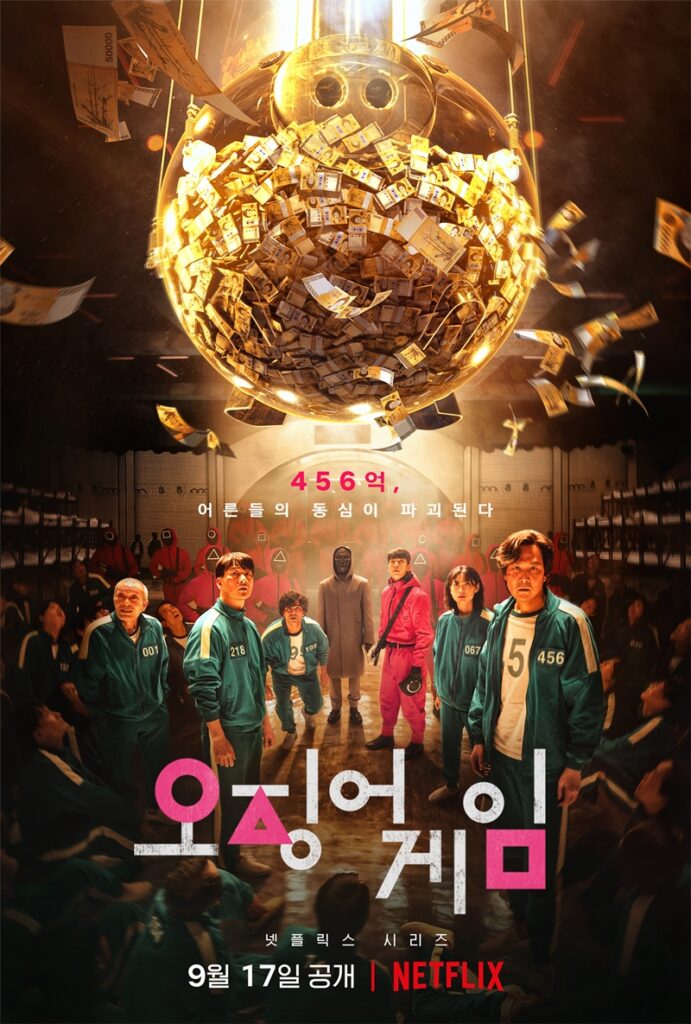
The series Squid Game, created by Hwang Dong-hyuk and released by Netflix in 2021, probably doesn’t even need an introduction — chances are you’ve heard of it, because it went insanely viral. And for good reason! Even though I’m not usually a fan of horror, and it definitely gets pretty gruesome at times, I still found it incredibly gripping and brilliantly put together.
Season 1 introduces Seong Gi-hun (Player 459), who joins hundreds of other contestants in a mysterious set of children’s games with a massive cash prize on the line. The atmosphere is intense, sometimes outright scary, and the games can get very bloody — but it’s all done in a stylish, purposeful way that amps up the tension and impact.
Highlights:
▫️ Classic children’s games get a dark, thrilling twist.
▫️ Gi-hun forms emotional bonds with characters like Sae-byeok, Ali, and Sang-woo.
▫️ The show blends action, drama, and surprising plot twists masterfully.
▫️ The spectacular ending leaves Gi-hun with a new mission: to fight back against the organization.
Season 2 shows a far more confident Gi-hun, determined to expose the system that nearly destroyed him. Even though there are fewer new games than in Season 1, the tone stays dark, exciting, and visually impressive. There are once again scarier and bloodier moments, but everything feels like a natural expansion of the world.
▫️ More backstory on The Front Man.
▫️ New characters who deepen the mystery of the organization.
▫️ More focus on conspiracies and undercover work.
▫️ A strong buildup toward a bigger confrontation.
There’s also a Season 3 now — my boyfriend and I finished it a few days ago, but I’m not going to say anything about that yet 😉
The series is visually striking: the colorful sets contrast beautifully with the dark themes.
It’s thrilling and emotional: the mix of suspense, drama, and human stories keeps you hooked.
Intense yet thoughtful: the scary and bloody scenes genuinely serve the themes and message.
It’s such an original concept: using children’s games as the basis for a deadly survival competition is both unique and unforgettable.
And every character has depth: you end up caring about all of them, even the more complicated antagonists.
And what makes it even more interesting… there are rumors that it’s based on a true story… 👀
There’s a claim floating around social media (TikTok, Facebook, Instagram) that Squid Game was based on a “1986 incident” in an underground bunker — supposedly in a “no man’s land” — where people were held hostage and forced to play games to survive.
People link this to Brothers Home, a real camp where, between the 1970s and 1980s, homeless people, the poor, and other vulnerable individuals were detained under harsh conditions. Photos shared in viral posts — hallways, brightly colored walls, people in blue uniforms — are said to come from that camp, leading some to believe the show borrowed visual inspiration from it.
BUTTTT… it’s highly unlikely any of it is true, because:
▫️ There’s no historical or journalistic evidence: no credible reports, no eyewitness accounts, no police or court documents that mention “deadly games” in a bunker in 1986.
▫️ The creators — especially Hwang Dong-hyuk himself — have never indicated that the series is based on such an incident. In interviews, he mainly cites fiction, his own experiences with debt and economic inequality, and inspiration from books/comics.
▫️ Many of the supposed “evidence photos” are not authentic: some are AI-generated or misleadingly edited.
▫️ Reputable fact-checkers (like Snopes) conclude that there’s no credible link between these alleged 1986 hostage games and the series.
So basically… the claim that Squid Game is based on a “real 1986 event” in a bunker is just a rumor — likely a mix of old stories about abuse in camps (like Brothers Home), viral social media posts, and frightening fiction. It isn’t supported by facts: there’s no reliable evidence, no documentation, and no confirmation from the creators.
In short: the series is fictional — inspired by social and economic issues and by historical injustices — but not based on an actual deadly-games bunker from the ’80s.
Which… honestly, let’s hope it stays that way.
Thanks for reading 🩷
🇳🇱
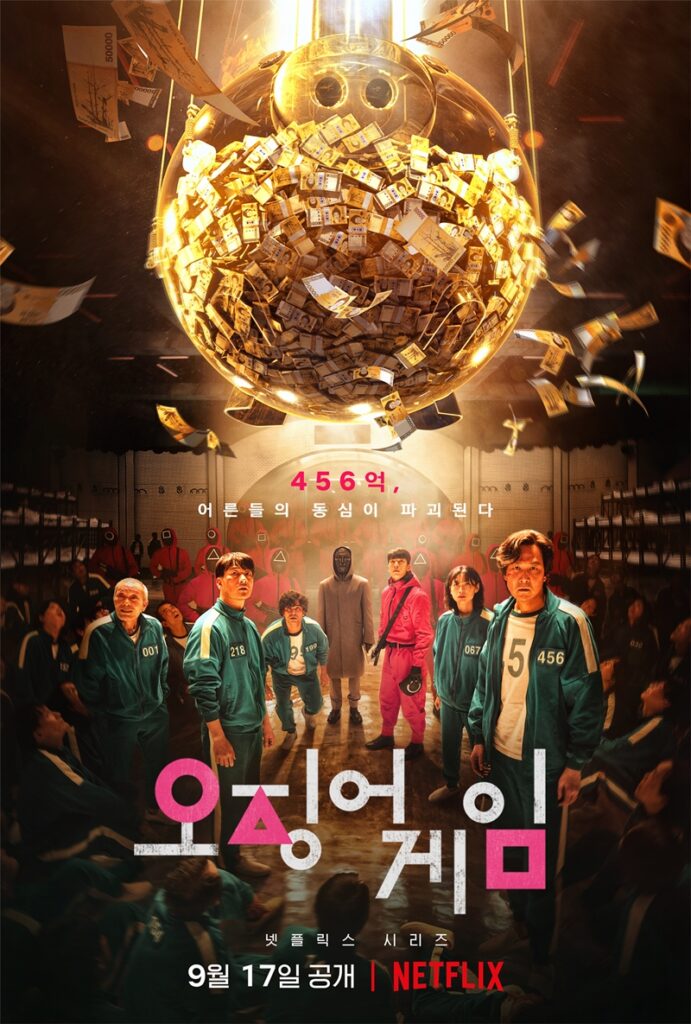
De serie van Squid Game is gecreëerd door Hwang Dong-hyuk en uitgebracht door Netflix in 2021.
Het zou me verbazen wanneer je deze serie niet kent want hij is behoorlijk viral gegaan. En met goede rede!
Ondanks dat ik niet echt van horror houd en ik vind hem ook echtwel luguber, vond ik het ook een onwijs meeslepende en goed in elkaar gezette serie!
Seizoen 1 introduceert Seong Gi-hun (speler 459), die samen met honderden deelnemers meedoet aan mysterieuze kinderspellen met een gigantische geldprijs. De sfeer is vaak intens, soms ronduit eng, en de games kunnen erg bloederig worden — maar dit wordt allemaal stijlvol en doelbewust ingezet om de spanning en impact te vergroten.
Hoogtepunten:
▫️Klassieke kinderspellen krijgen een donkere, spannende twist.
▫️Gi-hun sluit emotionele bonden met personages zoals Sae-byeok, Ali en Sang-woo.
▫️De serie combineert actie, drama en verrassende plotwendingen op meesterlijke wijze.
▫️Het spectaculaire einde laat Gi-hun achter met een nieuwe missie: terugvechten tegen de organisatie.
Seizoen 2 toont een zelfverzekerde Gi-hun die vastbesloten is om het systeem dat hem bijna vernietigde te ontmaskeren. Hoewel er minder nieuwe spellen zijn dan in seizoen 1, blijft de sfeer donker, spannend en visueel indrukwekkend. Opnieuw komen er engere en bloederige momenten, maar alles voelt als een natuurlijke uitbreiding van de wereld.
▫️Meer achtergrond over The Front Man.
▫️Nieuwe personages die de organisatie verder uitdiepen.
▫️Meer focus op complotten en undercoverwerk.
▫️Een sterke opbouw richting een grotere confrontatie.
Inmiddels is er ook een seizoen 3, die hebben mijn vriend en ik een paar dagen geleden ook afgekeken maar daar ga ik nog niets over zeggen 😉
De serie is gewoon visueel opvallend: De kleurrijke decors contrasteren prachtig met de duistere inhoud. Spannend én emotioneel: De mix van thriller, drama en menselijke verhalen blijft boeien. Intens maar doordacht: De enge en bloederige scènes versterken het thema en de boodschap. Het is een origineel concept: Kinderspellen als basis voor een survivalcompetitie blijft uniek en memorabel. En de personages hebben allemaal diepte: Je leeft met iedereen mee, zelfs de complexere antagonisten.
En wat het nog interessanter maakt… er zijn geruchten dat het gebasseerd is op een waargebeurd verhaal…
Er circuleert op sociale media (TikTok, Facebook, Instagram) een claim dat Squid Game gebaseerd is op een “1986-incident” in een ondergrondse bunker — zogenaamd in een “no man’s land” — waar mensen gegijzeld werden en gedwongen games moesten spelen om te overleven.
Mensen linken dit aan Brothers Home, omdat dat een echt kamp was waar tussen de jaren 70 en 80 daklozen, armen, soms ook kwetsbare personen werden opgesloten onder zware omstandigheden.
Foto’s die in virale berichten worden gedeeld — bijvoorbeeld gangen, felgekleurde muren, mensen in blauwe pakken — zouden uit dat kamp komen, waardoor sommigen vermoeden dat de serie visuele elementen overnam.
MAARRRR… het is zeer onwaarschijnlijk dat het waar is… omdat ;
Er is geen historisch of journalistiek bewijs: er bestaat geen betrouwbaar verslag, geen ooggetuigenmelding, geen politie- of rechtbankdocument dat wijst op “dodelijke spellen” in een bunker in 1986.
De makers — in het bijzonder Hwang Dong-hyuk (de bedenker van Squid Game) — hebben zelf nooit aangegeven dat de serie gebaseerd is op een dergelijk incident. In interviews noemt hij voornamelijk fictie, zijn eigen ervaringen met schulden, economische ongelijkheid, en inspiratie uit romans/comics.
De “bewijsfoto’s” blijken vaak niet authentiek: sommige beelden waarmee de bewering ondersteund wordt zijn AI-gegenereerd of misleidend bewerkt.
Respectabele fact-checkers (zoals Snopes) concluderen dat er geen geloofwaardige link is tussen die vermeende 1986-hostage-games en de serie.
Oftewel…
De bewering dat Squid Game gebaseerd zou zijn op “een echte 1986-gebeurtenis” in een bunker is een gerucht — waarschijnlijk een combinatie van oude verhalen over mishandeling in kampen (zoals Brothers Home), virale social-media-posts en angstaanjagende fictie. Maar het is niet onderbouwd met feiten: nergens is sprake van betrouwbare bewijzen, documenten of bevestiging door makers.
Kortom: de serie is fictie, wel geïnspireerd door sociaal-economische problemen en historische misstanden, maar niet gebouwd op een daadwerkelijke “deadly games-bunker” uit de jaren ’80.
Laten we dat ook maar hopen he…
Bedankt voor het lezen 🩷
○△☐