🇬🇧
A little summary :
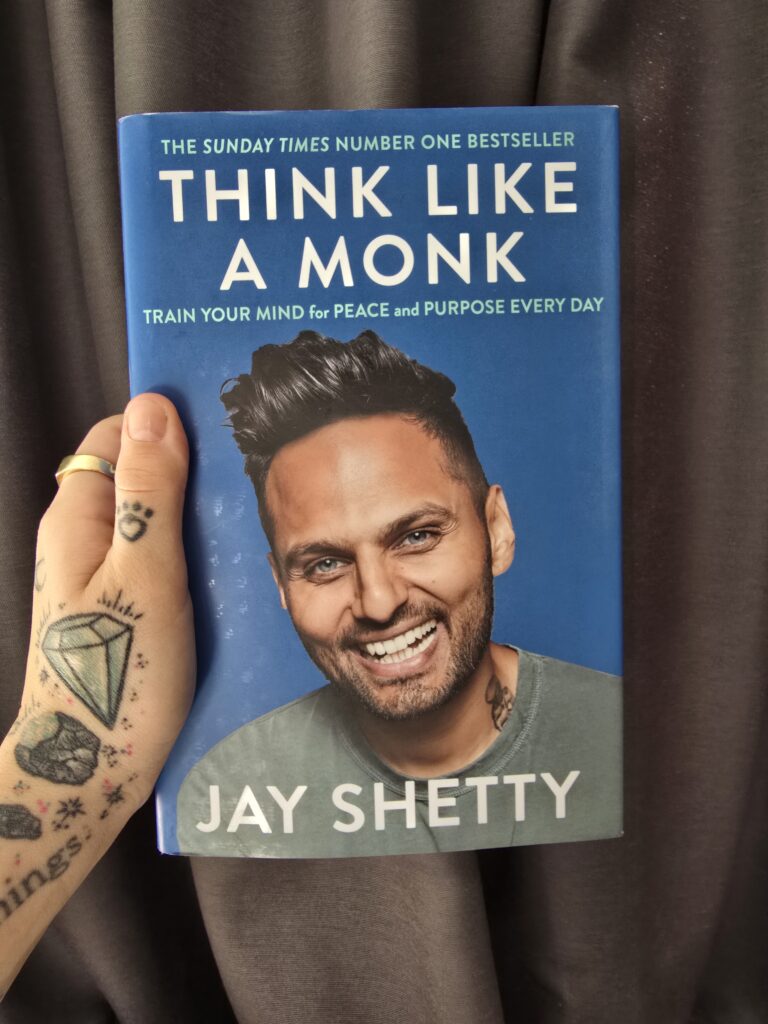
In Think Like a Monk, Jay Shetty, a former monk turned motivational speaker and author, shares the lessons he learned during his time living in a monastery. The book is structured around three main areas of life: letting go, growing, and giving. Shetty uses his experience as a monk to guide readers through practices that can help them develop a calmer, more focused, and more fulfilling life.
The book begins with a discussion on the power of the mind and how our thoughts shape our reality. Shetty encourages readers to silence the constant chatter of the mind, which often leads to stress and confusion. He introduces concepts like mindfulness, meditation, and the importance of self-awareness to help clear mental clutter. Shetty emphasizes that our environment, such as the people we interact with and the media we consume, greatly impacts our mental state, and by choosing positivity, we can better control our thoughts.
Shetty’s first core principle is letting go, which involves releasing negative thoughts and habits that hold us back. He suggests that we should learn to detach ourselves from material things, toxic relationships, and our attachment to outcomes. Letting go also includes overcoming fears and limiting beliefs that prevent personal growth. This principle invites readers to embrace change and uncertainty as essential parts of growth.
Next, Shetty explores the concept of growing, which involves developing virtues such as gratitude, kindness, and resilience. By practicing these qualities, individuals can cultivate a mindset that leads to long-term happiness and well-being. He explains how monks focus on developing these traits through daily routines and reflections. Shetty highlights the importance of continuous self-improvement, suggesting that growth is a lifelong process.
Finally, Shetty discusses giving, the ultimate goal of leading a monk-like life. He believes that contributing to the well-being of others—whether through kindness, service, or sharing wisdom—leads to greater fulfillment. Giving is portrayed not as a sacrifice but as a pathway to deeper connection and purpose.
Throughout the book, Shetty blends ancient wisdom with modern science and real-world examples, making the teachings accessible and applicable to anyone, regardless of background or beliefs. Think Like a Monk offers a roadmap for transforming one’s mindset, achieving inner peace, and living a more meaningful life by adopting the principles of monkhood.
I found it a really nice book to read and I even underlined something in the introduction of the book, it was : I felt the urge to be around people who had the values I wanted, not the things I wanted.
And these 2 lists I found very handy and interesting! (I did not put the whole list here)
Monkey Mind Monk Mind
complains, compares, criticizes Compassionate, caring, collaborative
overthinks and procrastinates Analyzes and articulates
distracted Disciplined
demanding and entitled Enthusiastic, determined, patient
self-centered and obsessed Self-care for service
looks for pleasure Looks for meaning
If you live in The Netherlands;
🇳🇱 Bestel hier de Nederlandse editie! 🇳🇱
🇺🇲 Order the English edition here! 🇺🇲